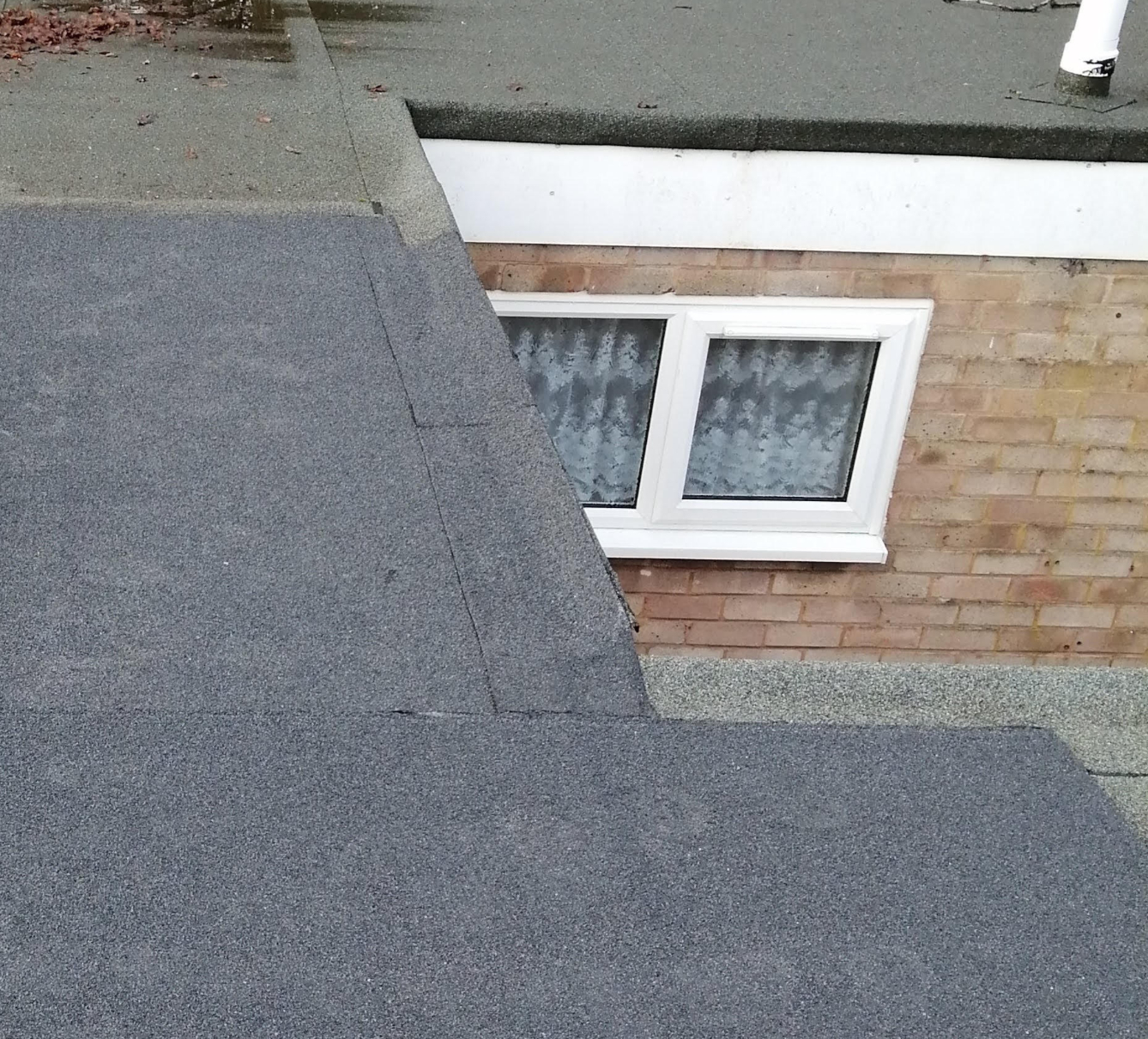
Flat roofs have a mixed reputation in the UK — largely because older felt systems from the 1970s and 1980s were genuinely problematic. Modern flat roof systems have changed dramatically, and the comparison today is much closer than you might expect.
Here's an honest breakdown of both options — covering cost, lifespan, maintenance demands, and when each type makes more sense.
Quick Comparison
| Feature | Flat Roof | Pitched Roof |
|---|---|---|
| Installation cost (per m²) | £50–£120 | £80–£200+ |
| Lifespan (modern materials) | 20–30 years (GRP/EPDM) | 50–100+ years (slate/clay) |
| Maintenance frequency | Higher | Lower |
| Repair cost (typical) | £200–£1,500 | £150–£1,500 |
| Insulation performance | Excellent (warm roof) | Good (if properly insulated) |
| Access for maintenance | Easy | Requires ladders / scaffold |
| Usable roof space | Yes (roof terrace, solar) | Limited |
| Planning permission risk | Lower (low-profile) | Higher (alters roofline) |
Flat Roofs: The Full Picture
Types of flat roof covering
Modern flat roofs come in three main material types, each with very different performance characteristics:
- Traditional felt (built-up bitumen): Cheapest to install (£40–£70/m²) but the shortest lifespan — 10–15 years. Now considered a budget option that typically needs replacing rather than repairing when it fails.
- EPDM rubber: Mid-range cost (£60–£100/m²) with excellent durability — 25–30+ year lifespan. Very good in the UK climate, flexible in cold, and resistant to UV. The seams are the only weakness.
- Fibreglass / GRP: Seamless single-piece covering (£70–£120/m²) with a 25–30 year guarantee common. Rigid, excellent for walked-on terraces, and repairs are very straightforward. Best option for most UK domestic applications.
Advantages of flat roofs
- Lower initial installation cost for extensions and outbuildings
- Easy to walk on and inspect — access doesn't require specialist equipment
- Can be converted to roof terraces with appropriate loading and membrane
- Good platform for solar panels
- Low visual profile — doesn't dominate the streetscape
Disadvantages of flat roofs
- Shorter lifespan than pitched roofs regardless of material
- Requires annual inspection — ponding water, debris accumulation and lap failures need catching early
- Drainage must be correctly designed — even a small fall is essential (1:80 minimum slope required under BS 6229)
- Insulation needs careful detailing to avoid condensation issues
Pitched Roofs: The Full Picture
Types of pitched roof covering
- Concrete interlocking tiles: Most common in post-war UK housing. Cost-effective (£50–£120/m²), 40–50 year lifespan, good weight distribution. Heavy, so the roof structure needs to be designed to take the load.
- Clay plain tiles: Traditional appearance, excellent durability (60–100+ years), more expensive (£80–£180/m²) but a long-term investment. Best suited to older or traditional properties.
- Natural slate: Premium product with 75–100+ year lifespan. More expensive to buy and lay (£100–£250/m²) but essentially maintenance-free for decades. Common in Wales, Scotland and period properties elsewhere.
Advantages of pitched roofs
- Much longer lifespan than flat roofs — slate or clay tiles last 75–100+ years
- Self-draining by gravity — no drainage design issues if correctly lapped
- Lower long-term maintenance cost per year of service life
- Loft space useful for storage or conversion
- Better suited to UK rainfall levels over the long term
Disadvantages of pitched roofs
- Higher installation cost for new-builds and extensions
- Harder to access for maintenance — ladders and sometimes scaffolding required
- Not suitable for all planning situations (alters roofline, adds height)
- More complex to build correctly, particularly at hips, valleys and around chimneys
Which Should You Choose?
For a new house extension or outbuilding, the pitch and height constraints often make the decision for you — building regulations or planning conditions may require one or the other. Where you have a genuine choice:
- Choose a pitched roof if you want the lowest long-term cost and minimum maintenance — especially if you're planning to stay in the property for 20+ years.
- Choose a flat roof (GRP or EPDM) if: budget is the primary concern upfront, the structure can't support tiles, planning prevents a pitched roof, or you want a walkable terrace space.
If replacing an existing flat roof that keeps leaking, upgrading to GRP rather than re-felting is almost always worth the modest extra cost — you're buying 25+ years instead of 10–12, and the total cost of ownership is lower.
Need advice on your flat roof or pitched roof?
We cover Birmingham and surrounding areas. Call us for a free inspection and honest recommendation — repair, replace or upgrade.
Get a free quote →