Most roof problems start small — a single loose tile, a pinhole in flashing, a hairline crack in mortar. Left for one winter, that small problem lets water in. Water finds structural timber, saturates insulation, causes damp patches on ceilings, and eventually leads to rot. What started as a £200 repair becomes a £5,000 structural job.
Here are the seven signs that mean you should call a roofer now, not next year.
Damp patches or water stains on ceilings
The clearest sign of a roof leak — but by the time you see a ceiling stain, water has already travelled some distance. The actual leak entry point is often several feet away from the visible damage. Don't ignore ceiling stains; they never clear up on their own and the damage gets worse every time it rains.
Tiles or slates on the ground (or missing from the slope)
Finding tiles on your lawn after a storm is an obvious signal. Less obvious is spotting gaps in the roof slope that you can see from the street — those gaps are letting water in directly. Even a single missing tile can allow a significant amount of water into the roof space in a single rainstorm.
Daylight visible in the loft
Go into your loft on a bright day and look up. If you can see pinpoints or shafts of daylight through the roof structure, there are gaps. Where daylight gets in, water gets in too. This is especially common around ridge tiles, hip tiles, and at the edges of the roof slope where mortar has failed.
Moss and algae growth
A green or black roof covering isn't just an aesthetic issue. Heavy moss growth retains moisture, lifts tiles as it expands and contracts with temperature changes, and accelerates the deterioration of roof felt and mortar. It also blocks gutters when it dies and washes off. Moss treatment can extend roof life significantly.
Sagging or uneven roof line
A healthy roof has straight lines — along the ridge, along the eaves, and along the hips. If any of these lines look wavy or you can see a dip or bulge in the roof slope, there may be a structural problem: wet rot in the roof timbers or a problem with the rafters or battens. This warrants an urgent inspection.
Failed or missing lead flashing
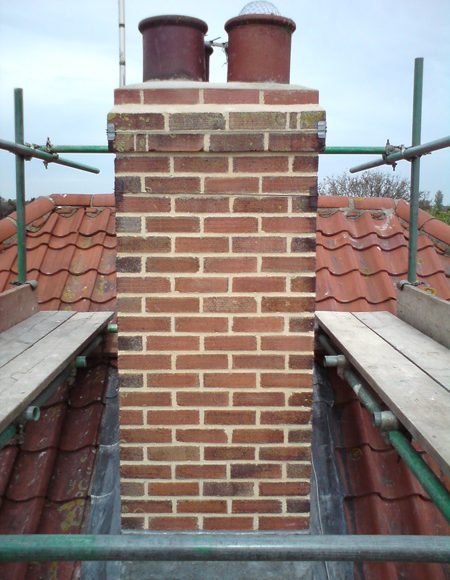
The lead strips that seal around chimneys, skylights, dormer windows and roof abutments are a critical weak point. When they lift, crack, or are simply bodge-filled with mastic rather than properly repaired, water runs directly behind the tiles. Signs of failed flashing include rust staining around a chimney and damp on a chimney breast wall inside the house.
Loose or rocking ridge tiles
The ridge tiles at the top of your roof are bedded in mortar. When that mortar erodes and the tiles become loose, two things happen: they leak, and they become a falling hazard. A ridge tile falling from roof height is a serious safety risk. If you can see ridge tiles that look skewed, or if a roofer mentions them during any visit, get them attended to promptly.
What To Do If You Spot These Signs
- Don't go on the roof yourself — untrained access on a pitched or wet roof is genuinely dangerous.
- Take photos from the ground using a phone zoom if you can see the problem area.
- Call a roofer for an inspection — reputable roofers will inspect your roof and give you a written quote before any work begins.
- If there's active water ingress, put a bucket down and call us the same day — we cover emergency call-outs across Birmingham and surrounding areas.
How Often Should You Have Your Roof Inspected?
Most roofing professionals recommend a visual inspection every 2–3 years for a pitched roof under 25 years old, and every 1–2 years for an older roof or flat roof. After severe storms — particularly those with high winds — it's worth checking even if you haven't noticed anything inside.
If your property has a chimney, annual checks on the mortar and flashing condition are worth the small cost — chimney problems are responsible for a large proportion of serious roof leaks.
Concerned about your roof?
We offer free inspections and written quotes across Birmingham and surrounding areas. Call us or fill in the form — we'll be with you the same day for urgent jobs.
Book a free inspection →